Asphalt Repair in Augusta
Every big paving bill started life as a small crack nobody sealed. Repair work is where that story gets stopped early — cut it out, fill it hot, and keep the water where it belongs.
Water is the whole enemy
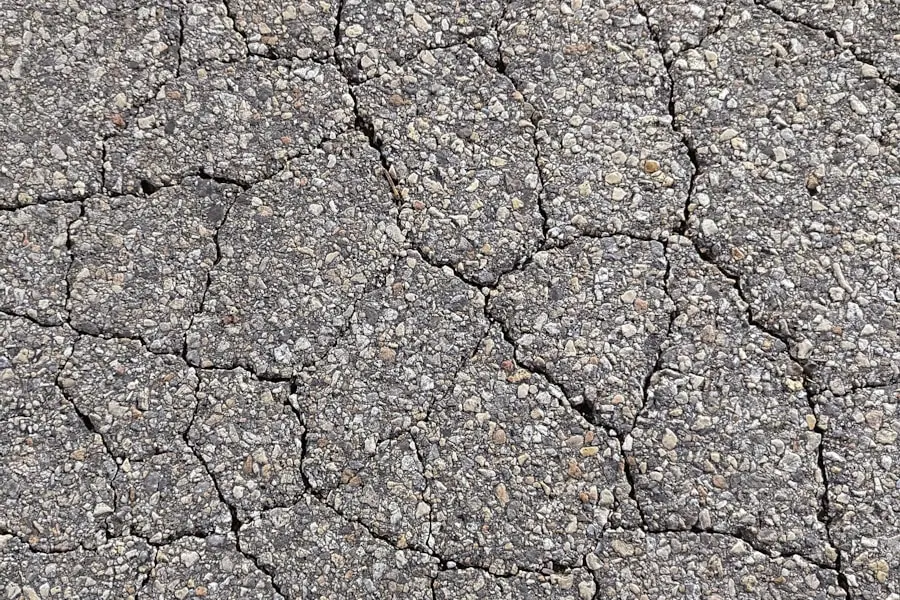
Asphalt rarely dies of traffic in a residential setting. It dies of water getting under it. A crack lets one of Augusta's summer downpours reach the stone base; wet base pumps and shifts under wheels; the surface above it loses support and breaks into the chicken-wire pattern pavers call alligatoring; then a chunk pops out and you have a pothole. Every stage is fixable — each one costs several times the stage before it. Good repair work is organized around interrupting that sequence as early as you'll allow.
What gets fixed, and how
- Crack filling. Cracks are cleaned out and filled with hot rubberized sealant that stays flexible through clay-country soil movement — not the cold pour-and-pray from a hardware-store jug. The rubber moves with the pavement instead of popping loose the first cold January night. Whether filled cracks should also get a coat over them is its own decision — crack filling vs sealcoating sorts it by symptom.
- Pothole patching, done full-depth. A lasting patch means saw-cutting back to sound asphalt, digging out the compromised base, recompacting stone, and placing hot mix rolled tight — square edges, level surface. Throwing cold patch in the hole is a rain delay, not a repair, and a straight quote tells you which one you're buying.
- Alligatored sections. Contained failure areas get cut out and rebuilt from the base up. If the pattern covers most of the driveway, patching becomes bad economics and the honest answer moves to the overlay-or-rebuild decision — the walk-through shows you where that line sits on your pavement.
- Aprons and edges. The first yard of driveway takes the hardest turning loads and gutter water besides, so aprons fail first on many properties. Unsupported outside edges crumble too, especially in the sandy ground south of town. Both get rebuilt, and where mower-strip erosion is undermining an edge, ask what backfill will stop it.
- Drainage-driven damage. Birdbaths that hold water after storms, ruts from downspouts discharging onto the mat, washout along the low side. Some of these are pavement fixes; some are grading fixes. Which one it is shows up on the estimate visit.
Priced by the visit, not the pound
Small repair jobs carry a minimum, because a crew and hot material travel whether the patch is one pothole or ten. The practical move for owners in Martinez and Grovetown subdivisions with first-generation driveways: list everything at once — cracks, the apron, that soft corner — and let one visit catch it all. Neighbors batching repair work on the same street stretches the trip charge even further; churches and small businesses can pair repairs with a lot maintenance pass the same way.
Send photos with the estimate form, since repairs are the one paving job that's often quotable from a good picture. If the picture shows alligatoring across most of the surface, the honest answer is new-driveway and overlay pricing, not patches.
Small fixes now, or big paving later. Your pick.
Asphalt repair across Augusta, Evans, Martinez, Grovetown & Hephzibah.
Call (706) 810-8884