Two Soils, One Standard: the Company on the Fall Line
Augusta sits where the Piedmont's red clay drops onto the coastal plain's sand, and a driveway built the same way on both will fail on one of them. This is the paving company that took its name from that line, and the reasons it did.
Where the Piedmont meets the plain
The shoals in the Savannah River that stopped the boats are the reason the city is here, and they mark the same boundary that runs under its driveways. North and west of downtown, out toward Evans and Martinez, a shovel goes into dense red clay that holds water through a wet January and shrinks hard in August. South toward Hephzibah the ground turns to sandy loam that drains in minutes and shifts under a loaded truck. Same metro, two entirely different subgrades, and the first question on any estimate here is which one your lot is on.
What the base does that the blacktop can't
Asphalt itself does not care where it is laid. The stone base under it cares enormously. On clay the base goes down thicker, is compacted in more passes, and the subgrade is shaped so water leaves instead of pooling under the mat. On sand the aggregate is blended tighter, and where the loam runs loose a geotextile layer keeps the stone from working its way down into the ground. Skip that thinking and the surface reports it inside three winters: alligator cracking on the clay side, rutting and edge crumble on the sand side. The driveway page walks through the build order, and the base is the step that decides the rest.
The four jobs
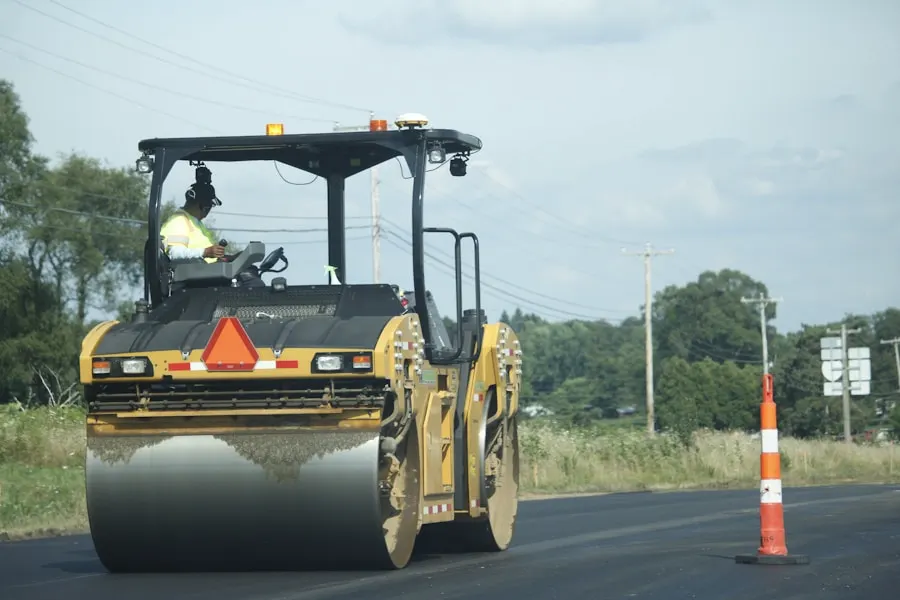
Residential driveways fill most of the calendar: new full-depth builds, overlays on tired surfaces, and tear-outs where the base has failed, with most projects landing between $3,000 and $10,000. Sealcoating is the maintenance half of the trade, a coat every two to three years that costs cents per square foot. Repair covers potholes cut out and patched hot, crack networks filled before water reaches the base, and crumbling aprons rebuilt. And small commercial lots, church frontage and shop yards, at a scale where the owner still answers the phone.
The order that saves money
Georgia sun pulls the oils out of asphalt binder and turns black pavement gray, and dried-out asphalt cracks under loads it used to shrug off. That is chemistry, not a defect, and it sets the order every driveway owner here should follow: seal while the surface is sound, patch and fill when cracks appear, overlay when the surface is spent but the base is good, and rebuild only when the base itself has failed. Each step costs far less than the one after it. Our job is telling you truthfully which step you are on, including when the answer is a cheap repair visit and no paving at all.
This side of the river
Augusta and the Georgia-side suburbs, from the Columbia County line down to south Richmond County: Evans, Martinez, Grovetown and Hephzibah, and there is a page for each one, since no two of them sit on the same ground. The Savannah River is the boundary, and the truck stays on this side of it. The trade is asphalt and nothing else: no concrete, no brick or stone hardscape. If concrete suits your project better, you will hear that on the phone along with the name of the kind of contractor to call.
Weekdays, seven to five
Monday through Friday, 7:00am to 5:00pm, at (706) 810-8884, with Saturday site visits by appointment. The estimate form takes rough dimensions and a word about what is under the tires now, and the callback comes with a working range before anyone drives out; the on-site measure turns it into a firm written number.
Tell us which soil. The base design follows.
Driveways, sealcoating, repair & parking lots — Augusta, Evans, Martinez, Grovetown & Hephzibah.
Call (706) 810-8884